Meet the work : Standing
Meet the Work: Standing – Reclaiming Power Through the Echo of Winged Victory
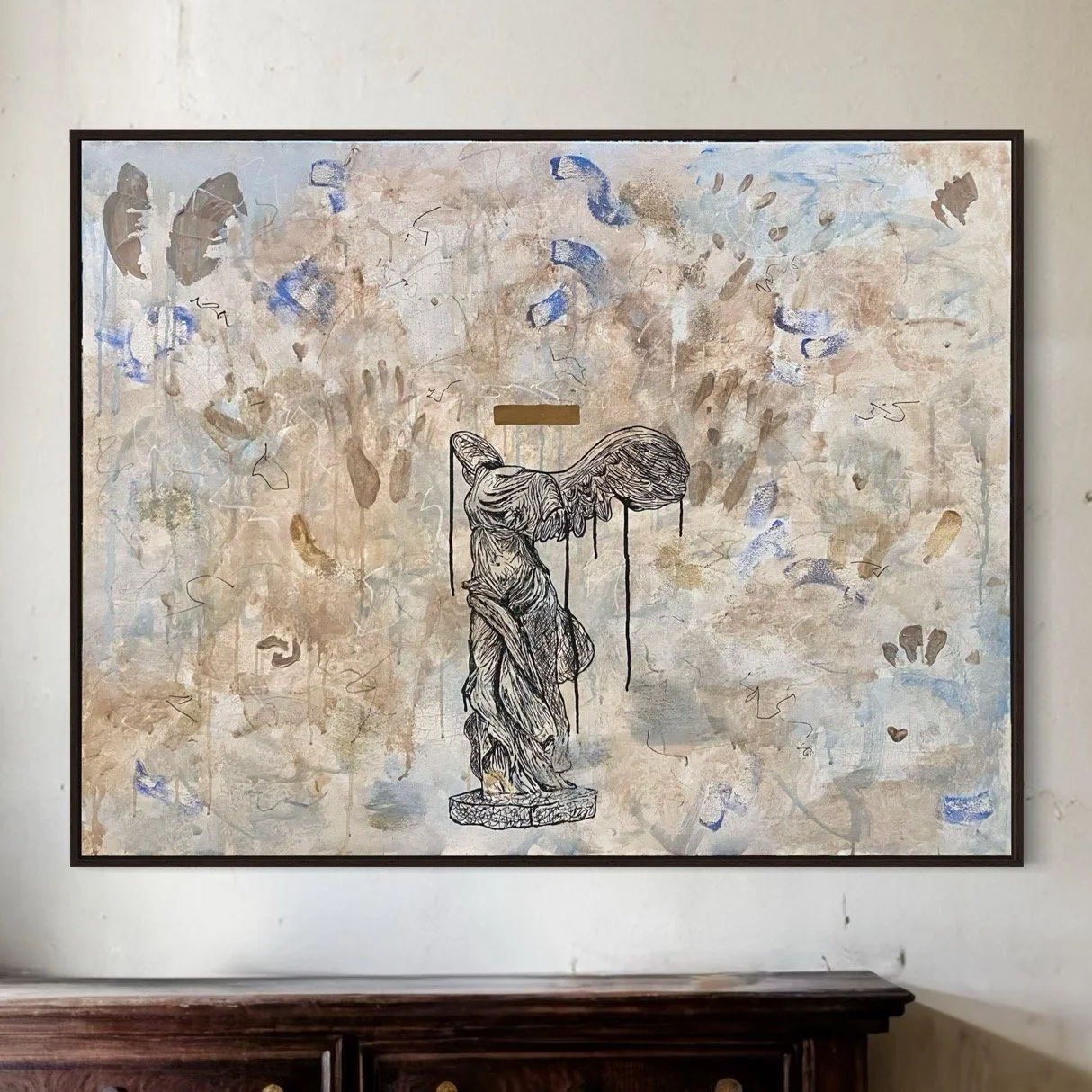
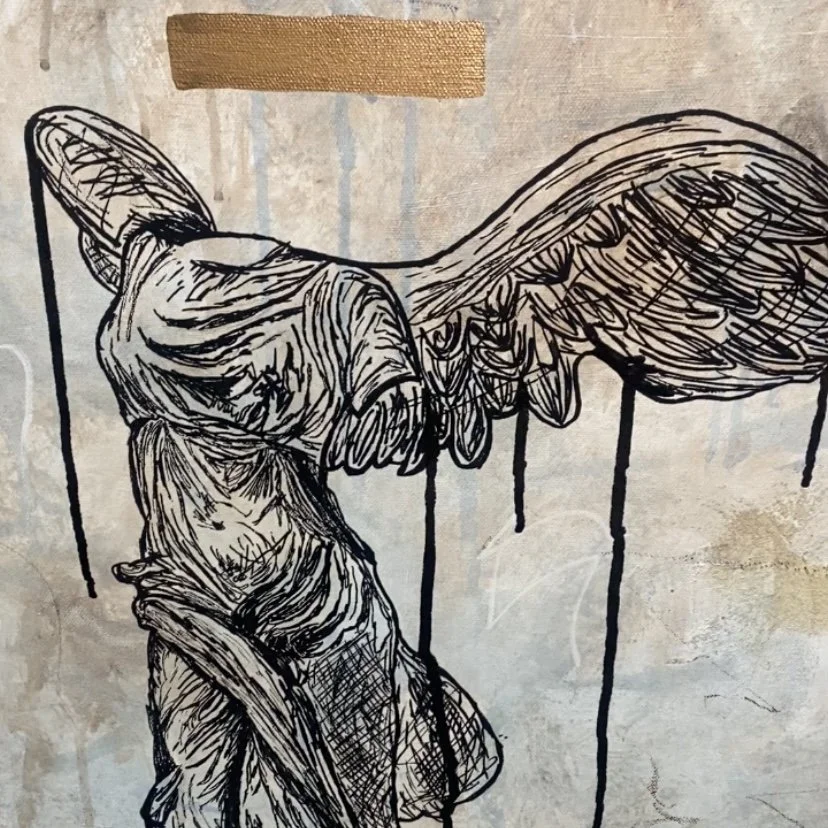
My latest piece, Standing, centers around a familiar yet eternally powerful image: the Winged Victory of Samothrace. Rendered in my own visual language, this work explores not only the classical symbolism of triumph, but what it means to endure, to remain standing, through centuries of erasure, conflict, and silence.
The original statue, also known as Nike of Samothrace, was created around 190 BCE to honor the Greek goddess Nike, the embodiment of victory. Discovered in 1863 on the island of Samothrace, it was likely part of a larger monument commemorating a naval win. Even without her head or arms, she stands atop a stone prow, wings outstretched as though caught in the instant of landing or taking flight. Today, the sculpture resides in the Louvre Museum, and is considered one of the most iconic surviving masterpieces of Hellenistic art, celebrated for its dynamic motion, emotional force, and resilience through ruin.
In Standing, she is placed against a backdrop of layered browns and blues, a palette chosen for its emotional weight and weathered honesty. The background is not smooth or untouched; it is subtly fractured, covered in dripping washes of earth and water tones. These drips suggest tears, storms, decay, the passage of time and the erosion of idealized beauty.
Flanking her on both sides are handprints, but they are not pressed flat in peace. They are gripping, clawing, almost, as if someone had tried desperately to hold onto her, to hold onto what she represents: a beauty, a person, or a truth that once felt perfect. These hands do not just reach; they cling to something that’s already slipping away.
In this way, Standing becomes more than a meditation on classical sculpture. She represents what is left of something that was whole, a body, a belief, or a love, that has been broken, perhaps irrevocably. The painting reflects the ache of trying to preserve beauty that has been altered by betrayal, or loss, or violence. It asks: What do we do with the remnants of something we once revered? How do we look at it now?
There’s grief in this work. The kind that comes from watching your view of someone shift after they do something they can’t come back from. The kind that lives in the silence between what was and what now is.
And yet, despite it all, she remains. Weathered. Winged. Still standing.