Meet the Work: Talk
Meet the Work: Talk – A Painting About Love, Loss, and the Linger of Hope
Titled after Hozier’s haunting song, Talk is a piece rooted in myth, music, and the fragile space between longing and letting go. Inspired by the story of Orpheus, the painting serves as a quiet echo of his doomed journey, the artist who played a song so sorrowful, it moved the gods, yet still could not undo death.
In the myth, Orpheus ventures into the underworld to retrieve his beloved Eurydice, armed with nothing but his music and his grief. He’s granted a single condition: she will follow him back to the world of the living, but he must not look back until they both have crossed the threshold. He walks. She follows. He doubts. He looks. And she is gone.
Talk is not a retelling, but a reverberation of that story, the ache of trying to love someone back into your world, and the quiet ruin when you realize you cannot.
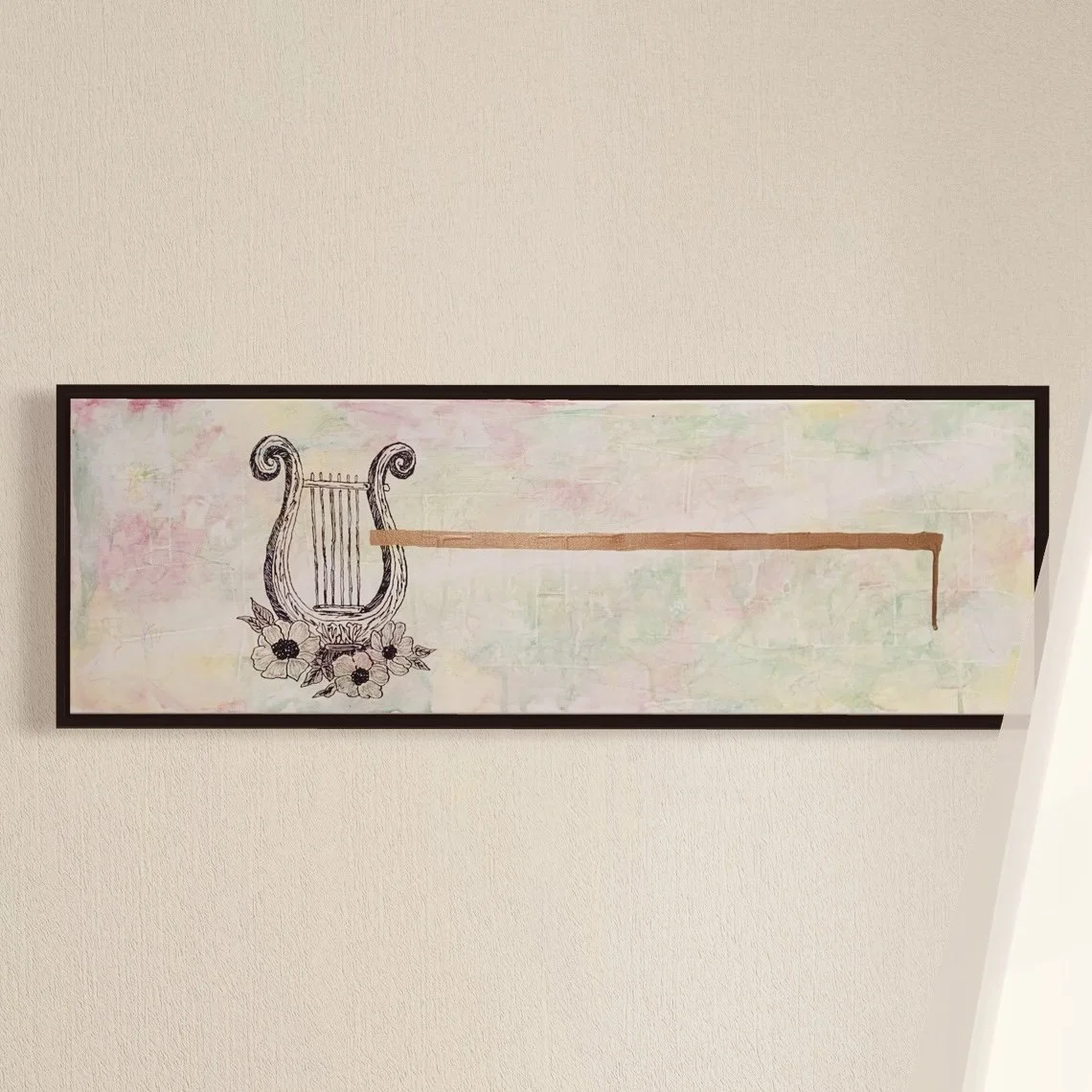
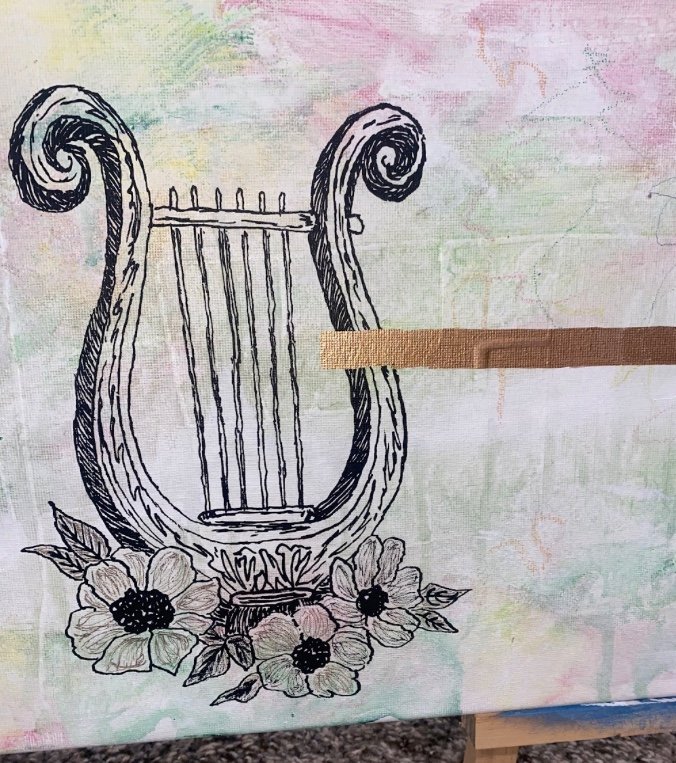
At the center of the painting is a lyre, poised and ready, its strings still whole, as if a song might yet be played. It’s a symbol of hope that persists, even when the body is gone and the voice has gone quiet. It stands in for all the words we didn’t say, or said too late.
The background glows in rose, green, and soft yellow, a palette of tenderness and memory. The roses suggest love, of course, but also mourning. The greens hint at life continuing, regardless of what we've lost. And the yellows, warm and gentle, represent the softness that remains even in sorrow, the light we still reach for, even in grief’s long shadow.
There is no figure in this piece. No Orpheus. No Eurydice. Just the lyre, the song waiting to be sung, and the space where love once lived.
Talk asks the same questions the song does: What if the words could have saved us? What if the silence was the thing that broke us? And if we could just say the right thing—play the right note—would it be enough to bring them back?